


The novelist Haruki Murakami published What I talk about when I talk about running, where he laconically reflected on 30 odd years of running nine miles a day. I expected him to crystallise the link between running and his creative process, but all he said was that running gave him the discipline he needed to write for several hours a day.
However, I doubted even this point, because as he says in the book, he is a ‘workhorse’ not a ‘racehorse’. He ran a jazz bar for a decade from his early 20s despite knowing nothing about business, while smoking three packs a day and retiring to bed in the early hours of the morning. Then one day, he decided he wanted to be a novelist, so he sold his jazz bar, quit the ciggies, started writing books and ran regularly from that point on. It seems to me that running and writing are both symptoms of the singular personality that is Haruki Murakami.
I wanted to get inside his head and know what sorts of thoughts came to him when he ran. Instead, he devoted one throwaway comment to the subject: “essentially I’m thinking of not a thing”.
Then he described what it took to write a novel. The sheer effort of imaginative extension is vast; you have to hold characters and plots in your head while they threaten to dissolve away. That, he said, was what running developed: sustained attention.
Murakami was writing in the Noughties, when running was a little fringe, but more impressively he was running in the Seventies, when it was the reserve of a freak, skinny few. In the decades since, running has exploded in popularity. Amongst a certain demographic (urban Gen Z-ers and Millennials), you cannot move for the parkruns, Strava posts, marathon sign-ups or run clubs. Running has become our generational pastime.
I feel a decade behind the curve even writing this. I’ve toyed with finding a new, more niche hobby, because I can’t stand how banal it sounds to say I run. Something like kite-flying, or gardening, or whittling, would fit the bill. Instead I’ve decided to double down, because I love running and I want to consider why it’s become so mainstream. That requires thinking about why I run.
Primarily, I run away from my problems. If I could run in a straight line rather than a loop, for an indefinite time, I would. I’ve lost track of how often I stress about something, build up nervous energy, then release it like an overly shaken bottle when I run. I don’t know what else I can do. Eventually this creates a habit, or dependency, like smoking but healthier. I’m not even sure it’s a virtue, it could be a vice. But the nervous energy dissipates, and the problems seem to as well, when I run. If I didn’t run I’d sink into a state of lethargy, compounded by my problems, then the added guilt of not exercising. I only have two modes and for now I will teeter between them.
When I’m running I can’t solve any of my problems, even if I wanted to (which I don’t). At most I can make mental notes of tasks to complete or people to message. Strangely this brings a sense of complete peace, because my low-resolution stresses start to clarify, no longer threatening me like shapeless shadows. I leave the overlapping pressures of work, mood, environment and relationships, replacing them with the one constant of running. Multiple arenas of incompetence are replaced by one controlled environment where you know the rules and success is measurable.
Running puts you in a meditative state of mind, where attention is not directed or fragmented. You start to notice your body acutely - shortness of breath is the first symptom, before your pulse becomes so loud you wonder if other runners can hear it when you go past. Sometimes your legs feel weak after a few metres and the prospect of another few miles makes you baulk. The next day, if it’s been a while, you’ll continue to notice heavy legs and tight shoulders. But really, the reward of running - to which you must pay the closest attention - is the euphoria of entering a flow state, when for a time you wonder if you could run forever. Eventually that diminishes again and nausea or exhaustion creeps back in, but for a moment you were experiencing reality as you fulfilled the potential of your body. Running is worth it for that alone.
Any pain of running is further compensated by the refreshed mental clarity. I have surprise, admiration, and a small portion of concern for people who can work behind a desk morning, noon and night without starting to go mad. I may be worse than some, but my mental energy comes and goes in sporadic bursts; typically by the afternoon I feel like a dry fountain pen struggling to etch a single letter, when only an hour before I was flowing freely. In those moments it only makes sense to run.
Humans might be complex creatures, but we are still creaturely. Since we live in a captivity of our own making we need to recreate the thrill of activities like sport or hunting, or experience the sheer act of surviving, that we are biologically wired to enjoy. Desk-based culture is many things, but it is not conducive to flourishing. The Industrial Revolution replaced physical human power with repetitive machine power, leaving only our cognition as a fecund economic resource, but God did not create us as brains on sticks. Running is one way to reclaim agency and surmount a cold division between body and mind.
A large part of running’s appeal is that two minutes after I’ve encountered a new problem, or noticed my vegetating brain, I can be on the road. I don’t need to book a session, find a partner, head to a pitch, grab some specialist items, check the weather, wait for summer, dress up, strip down, or anything. I need a pair of trainers and a running watch (here, I am still beholden to the machine). What’s more, I can do that from nearly anywhere in the world (Nairobi being the one exception I’ve encountered so far). I can head out for twenty minutes or for two hours.
Its simplicity means it’s equally simple to improve. If you are just starting out you will break PBs every few weeks. Running is a singular activity which forms the basis of almost every other sport. The flipside is that the act of running does not pose an inherent challenge, which is why it might not work for you, but there’s a satisfaction in that simplicity. The only variables are how far and how fast you are running. If you’re not running as far or as fast as you’d like, there’s only one thing to do: run more; the investment-reward ratio is straightforward. I could caveat with all else a runner considers: rest days, sprint sessions, cadence, diet, mileage, etc., but that is the final 20% at most. Running returns what you give to it.
What you get from running is the reward of consistent discipline. I love feeling fast in those moments when the body surpasses its limits, after you have run for miles feeling sluggish. Eventually something clicks into place and you tap into new reserves of energy. The mind and body are both lazy if they get the choice, persuading you there’s nothing in the tank. Ignore it though, and eventually both comply. The more you run, the more you learn those patterns and know what’s a petulant outburst and what’s genuine fatigue.
Know thyself is the great maxim of Greek philosophy. Running forces you to spend a huge amount of time by yourself, without much external stimulus, and I am sure this does a world of good. Stress over a work deadline feels less significant when you know what it means to push your body to a limit. Feeling tired means less when you know how much tiredness is a mental game.
It’s telling that St Paul reaches for running as a suitable analogy for the spiritual life, writing: “I do not run aimlessly…I discipline my body and keep it under control” (1 Cor 9:27). Our world is so saturated in comfort that any notion of resisting our bodily desires is met with confusion. A healthy spiritual life starts with discipline, and discipline is learnt through exercise as much as anything else.
This must come with a warning: running is not the way to look fit. At my running peak, I looked both chubby and malnourished. I can’t emphasise enough how little running does to your physique. At most, it justifies generous second helpings at dinner. I used to see jacked people running and think “Wow, look at what running does to a man”. However, my experience leads me to conclude these men were already jacked, and out for a run, and the two are entirely incidental.
Which begs a question: if it’s not for the perfect body, why are young people flocking to run clubs in droves? Firstly, most obviously, I think it’s this graph.
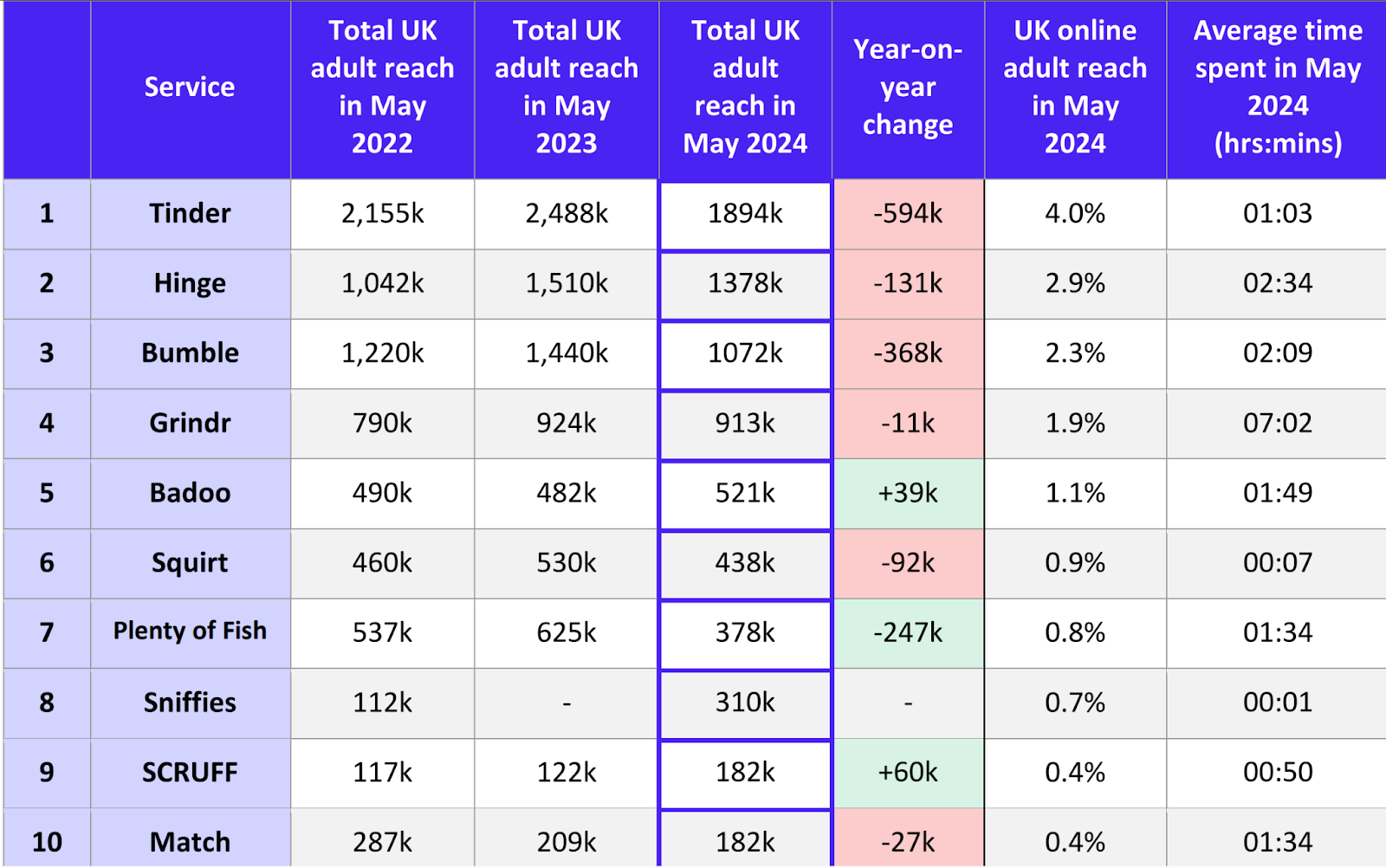
The resistance to the chronically online era has already begun. Guerilla warfare against Silicon Valley is waged in each run club. It turns out everyone hates dating apps, especially the ones using them. Hook-up culture is dead; real-life romance is back. Why wouldn’t you, a single in your mid-20s, join a club with dozens of fit, young people of the other gender, when you can all pretend you’re only there to run? I expect the natural differentiation between men and women in running helps, too: if women earn more than men, and have their lives more put together, what is left besides the ability to run a sub-20 5k?
Silicon Valley strikes back by absorbing running into the tech sphere (see my running watch, for instance). The domain of running is increasingly overrun by Strava, online gamification and fitness influencers. But there’s something irreducibly physical about running: your breath still catches, your legs wobble, your cheeks glow red, beads of sweat drip from your brow, your arms and legs are on show to the world. It’s the perfect first date. The more digital our lives become, particularly in cities, the more outlets like running will be relied upon. It’s telling how middle class and urban running is (see this study for a deep dive): rural folk and working classes don’t need reminding of their physicality.
Running in winter brings a special masochistic pleasure, on those mornings when you look outside in the dark and know that layers are not enough. Around Christmas time I ran out into a freezing mist which quickly coalesced into tiny, hard rain drops, eventually giving way to snow so cold my head hurt and my eyes stung. It took an hour to feel my hands again afterwards, but it exposed me to the bitterness of winter on my otherwise sheltered day. It reminded me of wintry grey evenings in childhood when I would barely notice the cold. I’d come home from sports and delight in the caked mud drifting off my skin in the bath, turning the water scummy in seconds. Now my life is much less visceral, suspended between bed, train, and desk. Watching the mud run off in the shower after trampling through heavy puddles on the forest floor on a cold winter’s morning is my small escape.
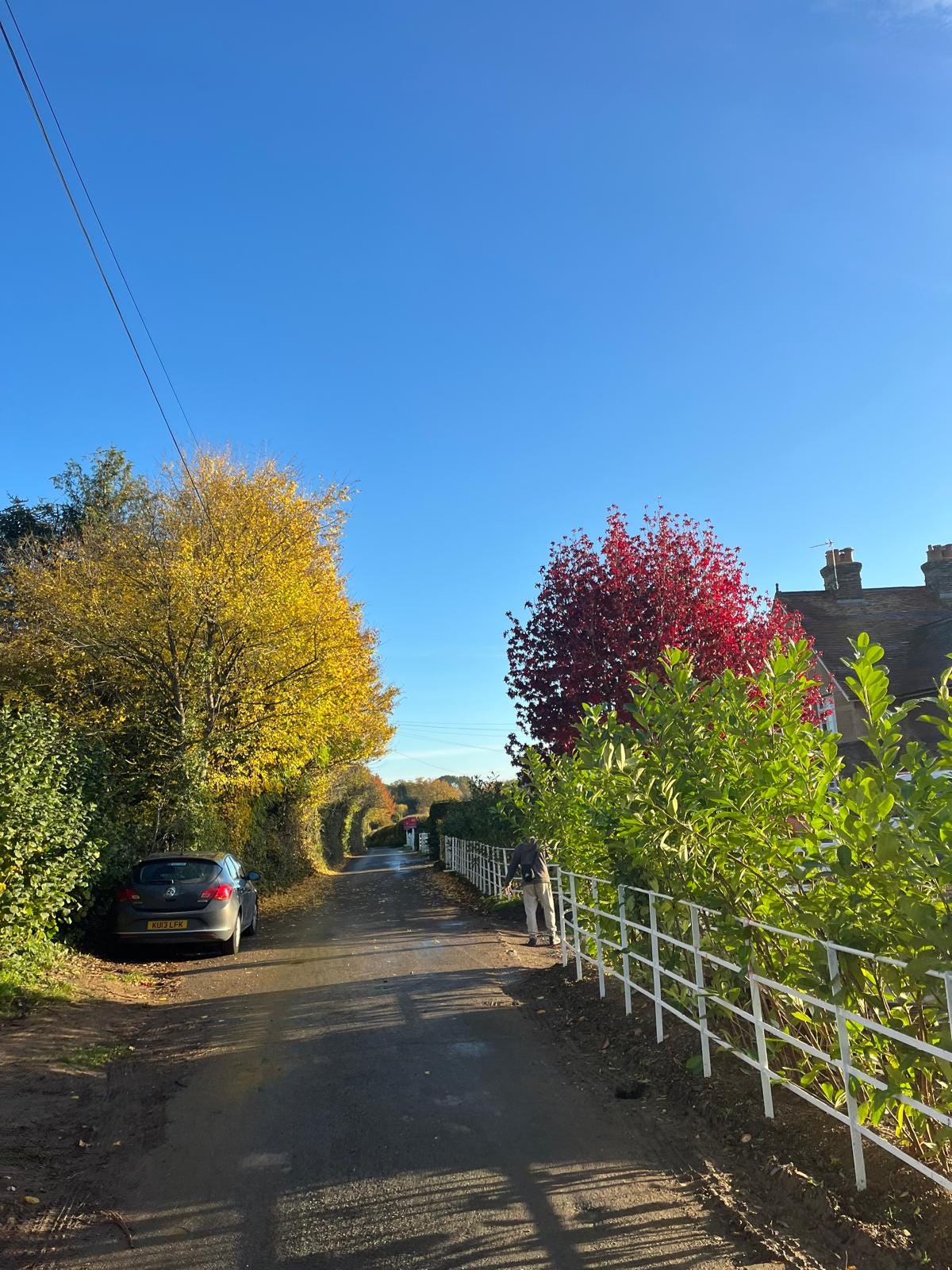
Running also builds a sense of place, as you cover the same roads time and time again through the seasons. Last week after months of greyscale I saw splashes of yellow daffodils poking up. Soon enough I can go back to running topless and sweaty on roads hardened from mud to baked earth. I will pass the same people and places but everyone and everything will look far more alive. You develop a fondness for the same stretches of path, changed by the seasons, where the hill gives way and you can see for miles, or where the morning mist hangs for a little longer on one field because it’s untouched by the sun, or where the canopy of trees closes tightly over your head and it feels like ancient land. I will never get tired of running past those same patches.
As it builds a sense of place so effectively, it is also the best way to explore somewhere new. In many places I’ve travelled, my runs are as memorable as anything else I did in my time there, and gave me a private way to call the place my own. I’ve paid my respects to the landscape by being in it rather than briefly passing it by. I’ve found secret paths, climbed mountains, drunk from streams (and got food poisoning from drinking the streams), cut myself on brambles, got hopelessly lost, swum in secluded beaches, seen spectacular sunsets, blistered my feet til they can’t go a step further, and generally had a brilliant time exploring the world through my runs.
Running’s growing popularity is not surprising because it’s the quickest way to touch grass. As our lives offer us less and less contact with the untamed world, running is a momentary escape. It’s why I love it, and why I think so many other Gen Z-ers do. It holds your attention, bringing it into line with your pulse, breath, and cadence to enjoy properly the simple God-given sensation of being alive. Give it a go some time, if you haven’t already.
Really enjoyed this. Having just started running I feel I’m starting to ‘get’ it and this article was very motivating. But how do you not be one of those people who only ever talks about how great running is? Maybe keeping up the cigs/cheese/poetry etc. do you want to be known as a ‘runner’? I don’t think so. Running as catalyst for better living rather than running as personality.
Sprawl lengthens the legs; it trains greyhounds on liver and beer.
Sprawl almost never says Why not? With palms comically raised
nor can it be dressed for, not even in running shoes worn
with mink and a nose ring. That is Society. That’s Style.
Sprawl is more like the thirteenth banana in a dozen
or anyway the fourteenth.
- Les Murray