


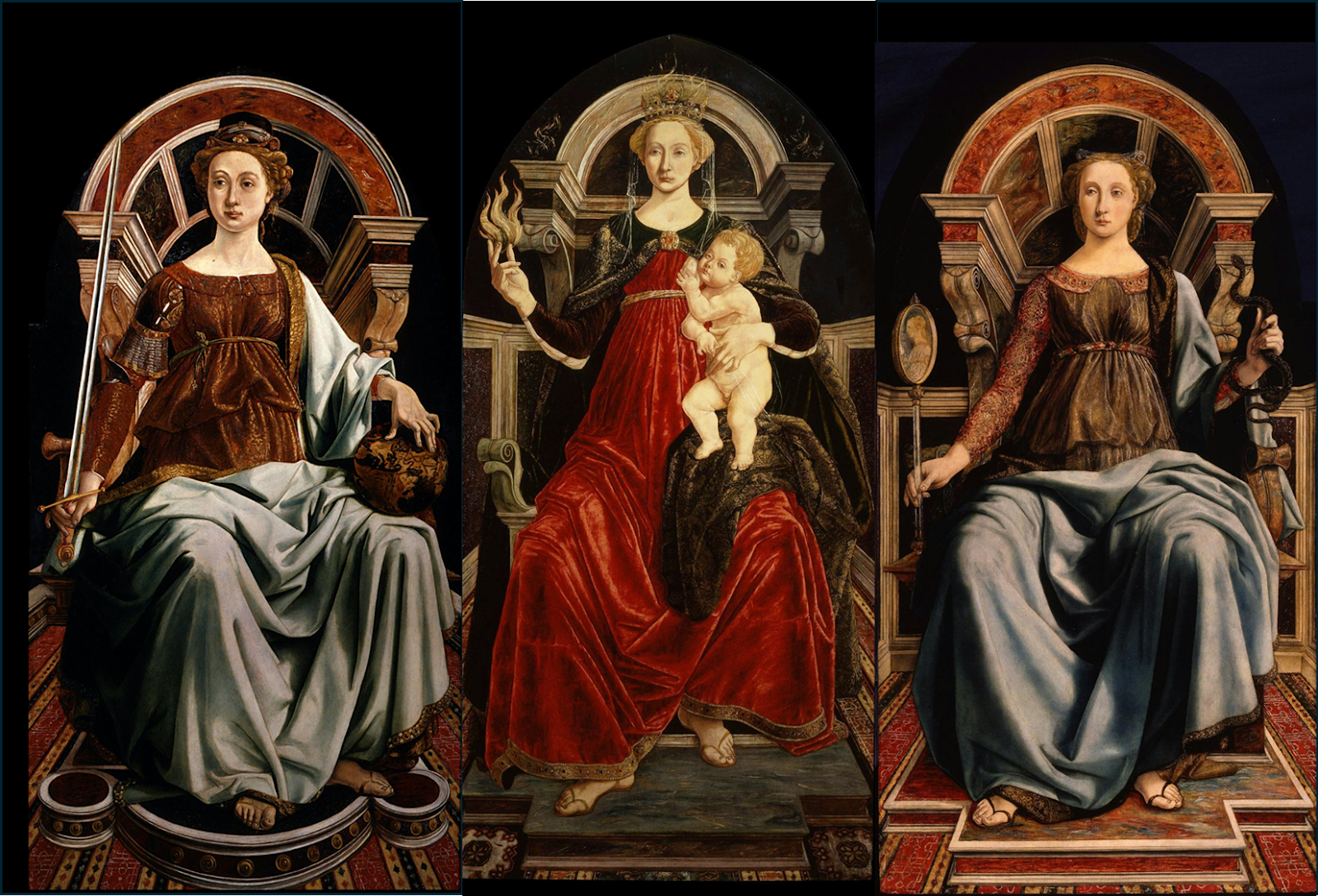
And Jesus, looking at him, loved him, and said to him, “You lack one thing: go, sell all that you have and give to the poor, and you will have treasure in heaven; and come, follow me.” Disheartened by the saying, he went away sorrowful, for he had great possessions.
Mark 10: 21-22
What should I do with all this money I’ve got? If you live in the UK or a similarly developed country, then you are most likely rich. Living might feel expensive but that is probably because – compared to the vast majority of people in the world and in history – your living standards are sky-high.
So this Lent, a season when we traditionally give particular attention to charity, the words of Jesus to the rich young man should be a challenge for us: “Go, sell all that you have and give to the poor.” The most obvious application of this is the most important – we should give more of our money away. We have too much of the stuff. Everything that follows is not an alternative but an addition to this. As with the man to whom Jesus spoke, we are often sorrowful because we are rich.
There is great comfort in Jesus’ words for those who give away their wealth – you will not lose a penny, since you will gain treasure in heaven. A friend of mine likes to say that giving money is the ultimate way to short the market – there will be a day when cash will be worthless and money invested in the kingdom of heaven will have limitless value.1 You keep 100% of the money you earn, and your tithe is just a 10% investment in the best-performing hedge fund you could find.
But this works the other way round too. One of the manifestations of a secular mindset is when we make a divide between the money we devote to God and to others, and the money we keep for ourselves. Sure, we may be generous and give 10%, 20%, 30% away, but that still leaves 90%, 80%, 70% for us. I do not think that to obey Jesus we must literally sell all our belongings – his words were a specific remedy for a specific man. For some of us, that might be closer to the practical application - it should at least be a question we ask ourselves, whether we would be prepared to give everything away and serve God in the poorest corner of the world. But the lesson is certainly for all of us. There is not some money for God, some for ourselves. In one sense, it is all for us: whether we keep it or give it away, it can all be to our advantage. But in another sense, it is all for the other: for God, for the church, for your neighbour.
This is Christ-like sharing, Christ-like charity, Christ-like love; not dividing into yours and mine, but uniting our hearts in love so that – as in the most literal and absolute enactment of this – we can say, “all that I am I give to you, and all that I have I share with you.”
Our instinctive reaction to this may be that it is too extreme or ‘works-based’, and that we should not be so moralistic about such things. Again, though, this is an example of the secular mindset, that there are some things to be moralised and others to be left alone. This was the bête noire of the Victorian arch-moraliser John Ruskin: art critic, literature critic, pretty-much-everything critic. He criticised free-market capitalism as well as socialism, and influenced many social reformers including much of the early Labour Party.
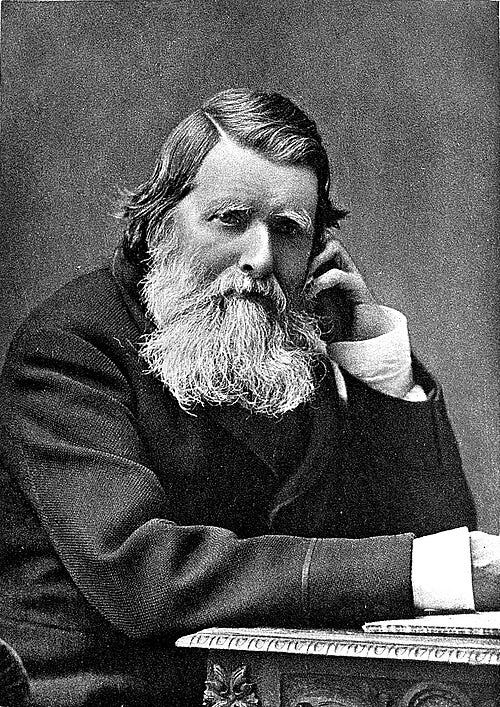
In Ruskin’s most famous essay, Unto The Last, he argued that to conceive of economic philosophy or policy without regard to moral consequences is not just iniquitous but nonsensical. He wrote primarily about society-wide issues, but he recognised that any solutions begin with individual effort. Whatever your broader political beliefs, the implications for our personal treatment of money are salutary.
Ruskin drew a distinction between mercantile economy and political economy. The former is the amoral science of accumulation, and is – explicitly or implicitly – a zero-sum game where the end is gain and the means is ‘the art of keeping your neighbour poor’. Political economy, in contrast, is concerned with the health of the polis, and disdains the idea that differing interests must be antagonistic. This is seen in the example of a hungry mother and her children looking at a single crust of bread; though in theory they are in competition, they need not be in conflict.
The application of political economy is the willingness of the merchant – or anyone dealing with money – to make sacrifices. As soldiers put their lives at risk for their country, as lawyers, ministers and doctors stake everything on their integrity, so ‘sixpences have to be lost, as well as lives, under a sense of duty’; and ‘the market may have its martyrdoms as well as the pulpit’.
This is not firstly about charity – this is about the ways in which we engage in business. It is about the people we employ, the goods we purchase, the money we invest. We should use money – and be prepared to lose money – in order to create and sustain life, rather than to destroy or corrupt.
At this point, two objections may start to rise. One is that this sounds too much like a front for socialism, a Christian veneer on wealth redistribution. Ruskin has been influential for left-wing thinkers, but he himself rejected socialism, declaring that just as ‘the rich have no right to the property of the poor’, so ‘the poor have no right to the property of the rich’. He believed that inequality of wealth was essential, and can be beneficial to all of society provided that those who are rich use their money for the good of the polis.2
Second would be the accusation that this is a luxury belief – that stipulating how people should use their money is all very well for the middle classes but will be burdensome for those further down the economic scale. The label is accurate and in fact should be embraced. The point is that to pursue a moral economy is a duty in proportion to one’s means. To be in a position to sacrifice money is indeed a luxury, and those who can afford such a luxury should do so without cajoling those who cannot.
Every person ought to apply moral wisdom to their financial decisions, but the outworking of that will differ according to means, with neither poor nor rich having inherent superiority. Certainly, a framework which imposes a greater burden on the poor than on the rich is not Christian at all.
At the heart of Ruskin’s political economy is the principle that while only part of our money should be given in charity, all of our money should be used with justice. Justice, not gain, should be the yardstick by which we make any financial choices. When I make a purchase, my aim should not be to get as much as I can for as little as possible, but to pay the fair price, reflecting the labour which has gone into the product.
I find this rather painful; perhaps it is the Yorkshire blood within me which revolts at the idea of parting with more than is necessary. But if I am honest with myself, I know that when I buy something on the cheap, I am merely forcing someone else to bear the extra cost. It could be the underpaid worker in a clothing factory, or the maltreated animal turned into cheap meat. The remedy is to be a snob in our consumption – anyone who can afford to do so should refuse to buy cheap produce, not because they are a better person, but because that is the responsibility which comes with wealth.
At the same time, there is the responsibility to be prudent and to provide for those under our care. Hence we may need to make sacrifices in our luxuries in order to afford just prices for our necessities. If the foreign holiday has to go so that I can buy locally-reared meat, then so be it – and I should not make a great song and dance about it as if I am the saviour of the natural world; it is hardly suffering to have to eat Cheshire-raised chicken. As a general rule, we should buy less and buy better, aiming to cultivate simpler tastes which can be satisfied to others’ benefit and not to their cost.
As well as avoiding harm, we should seek to actively bless others with everything we have, and not just with the part that we give away. Here, the principle is that we do not only share our money, but that we share our wealth. Ruskin’s definition of this word is comprehensive: ‘THERE IS NO WEALTH BUT LIFE. Life, including all its powers of love, of joy, and of admiration.’ Thus we share our wealth by sharing our life.
To begin with, we must recognise with George Herbert that ‘use alone/makes money not a contemptible stone.’3 Saving with a purpose is wise, but filling up bank accounts for the sake of it is to be mammon’s slave rather than its master. Again, it is a temptation to which I succumb very easily. This time I shall blame my mathematical brain – I just love seeing the numbers go up. But it all counts for nothing until I spend it, and as consumption is the end of production, so it is only in wise consumption that wealth can ultimately be a blessing.
True wealth is constructive. It builds up rather than tears down. This starts with the effect on the individual – do the things I buy help me to grow or do they corrupt me? Do they benefit me physically, so that I can protect and provide for others? Do they benefit me intellectually, so that I can teach others? Do they benefit me emotionally, so that I can love others? Do they benefit me spiritually, so that I can honour God and lead others to him?
Wealth should be constructive externally as well. We should seek to construct homes which can provide shelter and hospitality, businesses which produce useful goods and services, and – most immediately life-giving of all – families in which children are brought up well. In wise consumption directed towards these ends, we are sharing all of our wealth to build up ourselves and others.
But in case this sounds dour and utilitarian, true wealth should also be felicitous. God has given us good things to enjoy, and not usually to enjoy by ourselves. There is a place for private pleasures, but we are made for one another, and our wealth will commonly bring us more happiness if it is shared. A rich man could send half of his feast to the poor man’s house, and each could eat well alone. Or, he could invite the poor man into his home and share the company as well as the food.
In a society plagued by depression and loneliness as much as by poverty, this is particularly needful. It is not a substitute for supporting the financially poor, and we should be careful lest we slip into only socialising in the ways we find easy and comfortable without thought for others’ need. We ought to be deliberate, generous and sacrificial in our festivities, so that above all our tables are places of love.
In this regard especially, we shall find that our wealth at last starts to bring us real, solid, exuberant happiness. As we devote it to God by sharing it with others, we will discover that we have lost nothing and gained much. All along, the one thing we have lacked is to give our wealth away.
Postscript: As I began this essay, it occurred to me that I have written two consecutive pieces inspired by deeply moralistic writers – Dickens and Ruskin – at two deeply moralistic seasons – the New Year and the beginning of Lent. I make no apology for this, and instead present them as a pair standing for the simple fact – apparently tautological yet often scorned – that it is good to be good. The Victorians are today derided as self-righteous hypocrites, which I suspect largely stems from a self-consciousness of our own moral inferiority. However, for the avoidance of doubt, let me say that it is not for me to tell you, strange reader, what to do or what not to do, and that I am only passing on what I have learnt from others. Any vice against which I write has its most painful clarity in myself, and if I extol any virtue, it is because I believe that by God’s grace it shall one day make me happy.
I don’t exactly know what it means to short the market; there's a reason I'm a maths teacher and not a finance bro.
This of course raises the question of what to do when the rich are not concerned for the good of society, and to what extent the state should then intervene.
The Church Porch, XXVI